The Parish Feast and the Work of Remembering
A parish feast can carry local memory through food, roles and customs. Learn how to notice, record and share those details without inventing one origin story.
A parish feast remembers a place through what people make, do and repeat. To understand that local memory, follow the work in order: notice the details, ask who holds them, record what is known, then make room for change. A feast is not a museum display, and its meaning rarely fits one tidy origin story.
What happens before the feast begins?
Start with the preparations, not the speeches. The work often reveals how an event is carried from one year to the next: who lays tables, who brings a familiar dish, who checks the serving order, and who knows where the old banners or cooking pans are kept.
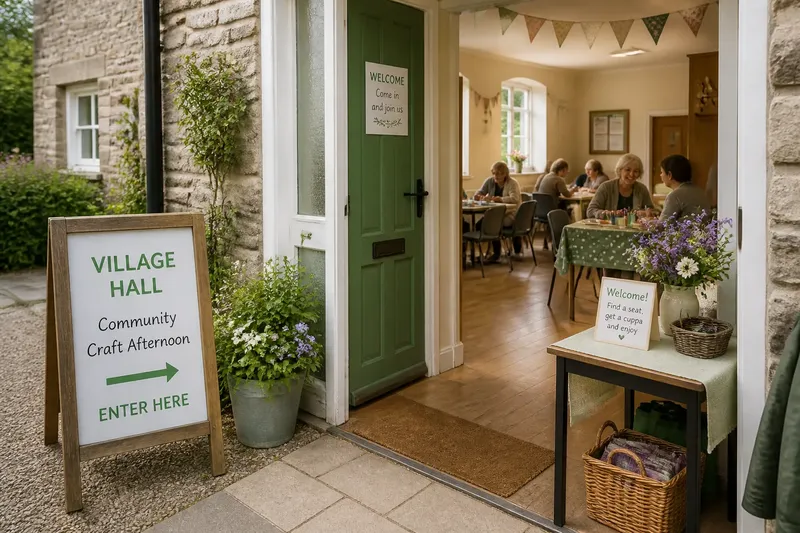
Spend time where the preparations happen, such as a church kitchen, village room or family yard, if you are welcome there. Watch for repeated choices. A particular loaf may appear each year, but so may a way of arranging chairs or a quiet agreement about who serves older neighbours first. These customs can matter without being formally announced.
Make a small field note with four headings: food, roles, objects and actions. Write down what you observe and when. Keep interpretation separate. “A tray of oat cakes was set aside before serving” is an observation; “the cakes are offered in memory of a local family” is a claim that needs a source.
How do you ask about a custom without imposing a story?
Ask open, specific questions while people are doing something they know well. “Who usually makes this?” invites a different answer from “Is this an old tradition?” The second question suggests an age and a shared account before anyone has had a chance to explain.
Ask more than one person, especially when memories differ. A cook may remember a recipe changing when an ingredient became harder to obtain. A committee member may remember when the serving job shifted to a new group. A younger attendee may know the feast as a place to meet relatives, rather than as a ceremony with a stated meaning. All are local knowledge, but they are not interchangeable.
Be clear about your purpose and how you might use what you hear. Some memories belong to a household or a particular group, not to public circulation. Ask before recording voices or photographing people, handwritten recipes, family objects or children. If someone would rather speak without being named, respect that choice.
What should you record while the details are fresh?
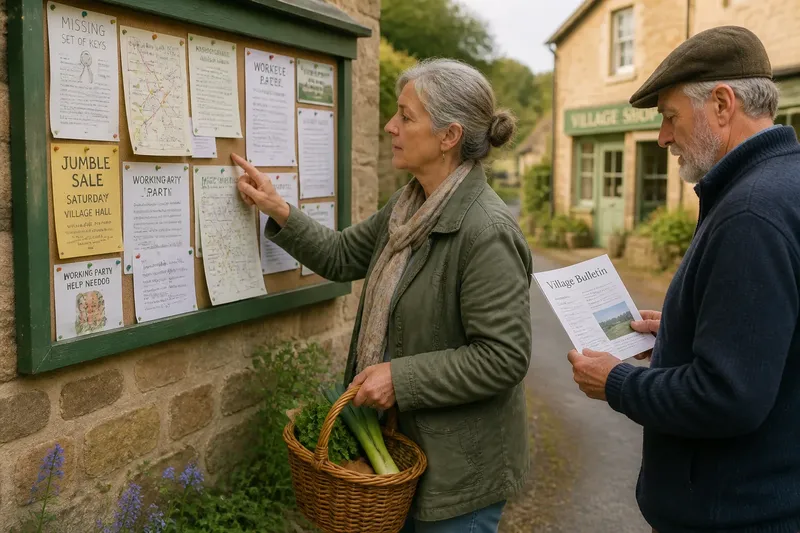
Keep a simple record that separates the event’s visible pattern from people’s explanations of it. Note the feast’s name as locals use it, the place, the season, the foods served, the tasks people took on and any changes mentioned. Record who told you each detail and whether they asked to be identified.
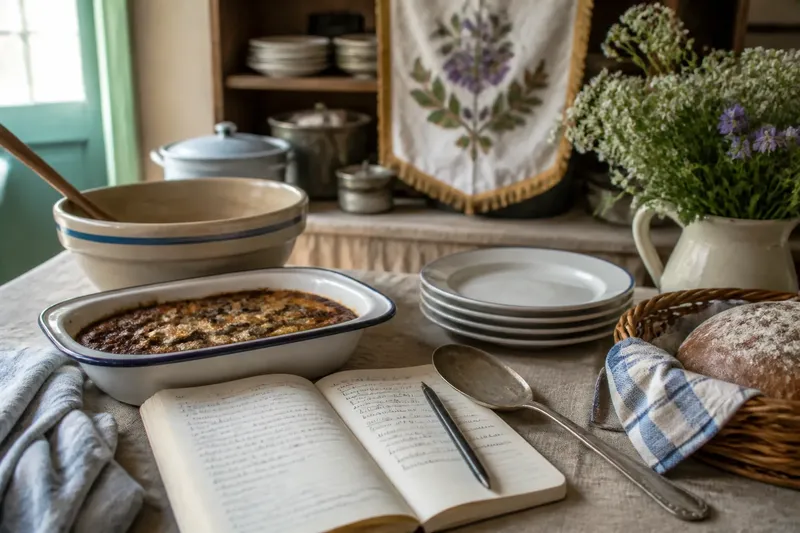
For a recipe, note the name people use, the ingredients they are willing to share, and the parts described as “by eye” or “until it looks right”. Do not tidy those phrases into false precision. A recipe often lives in judgement: the feel of dough, the colour of a sauce, the point at which a pan is ready. That knowledge can be described without pretending it is a fixed formula.
Imagine you are helping document a fictional parish supper where one family brings a barley pudding each year. One resident says it was made for the feast when she was a child; another recalls that her own family began bringing it later, after a different dish fell out of use. Record both accounts with their speakers’ permission, and describe the pudding’s place in the current supper without declaring either memory the single origin. The expected result is a useful record of continuity and change, not a verdict.
How can the feast’s roles and objects be understood?
Look beyond the person at the lectern or the organiser named on a programme. A recurring event may rely on people who shop, bake, lend equipment, set out crockery, welcome newcomers or clear the room. Ask which tasks are repeated, which are shared, and which depend on one person’s private knowledge.
Objects can point towards past arrangements, but they do not explain themselves. A marked serving spoon, a cloth with a stitched name, or a handwritten menu may prompt a question. Ask who recognises it and what they recall. Do not assign an object a ceremonial meaning simply because it looks old or unusual.
It is not worth the effort to make every small habit carry a symbolic interpretation. Some things are done because they work, because a neighbour prefers them, or because the cupboard contains that particular tray. Ordinary reasons are part of a feast’s history too.
How do you share what you have learned?
Return a draft to the people whose memories and work it describes. Keep the language plain, attribute differing accounts, and mark what remains uncertain. Ask whether names, photographs and family details may be shared beyond the immediate group. A short printed sheet at the event, a local archive copy or a recipe booklet can each suit different material; choose a form that people can use and keep.
Include present-day voices alongside recollections. A feast is not only something inherited; people decide what to retain, adapt or stop doing. A new dish may become familiar through repetition. A role may be handed over because the previous holder wants to rest. Recording those choices prevents “tradition” from sounding like a command issued by an invisible committee.
If accounts conflict, do not smooth them into a single pleasing version. State that memories differ and describe what each person remembers. If a detail cannot be checked, label it as an account rather than a settled fact. This is more respectful than filling a gap with a confident guess.
What questions help make sense of a parish feast?
Does every parish feast have one origin story?
No. An event may have changed gradually, and people may remember different starting points or purposes. Treat origin stories as accounts to record, not as a contest that needs one winner.
Should you write down a recipe exactly?
Write what the cook agrees to share, including the sensory cues that guide the method. If quantities are approximate, say so rather than inventing precision.
What if people remember the same custom differently?
Keep the accounts distinct and identify their sources with permission. Differences can show how the feast was experienced across households, generations or roles.
Can a new custom become part of local memory?
Yes. Repetition and shared meaning can make a newer practice familiar, though people may still remember when it began. Record its arrival as carefully as older customs.
How does remembering continue after the event?
Before the next feast, return the notes, photographs or recipe copies to a place where organisers and participants can find them. Ask whether anything should be corrected, restricted or removed. Keep a clear distinction between material intended for public use and details shared only for context.
Then notice what happens in the next cycle. Does the same person take up the same task? Does a dish return, change or give way to something else? A parish feast carries local memory not by keeping every detail untouched, but by giving people repeated occasions to make, explain and revise it together.